
The Ultimate Guide to Landing Remote Software Engineer Jobs in 2026
TL;DR
- Demand is Booming: Remote software engineering jobs offer unmatched flexibility and competitive salaries, often exceeding $130,000 annually.
- Top Skills Needed: Proficiency in Cloud computing (AWS/Azure), full-stack frameworks (React, Node.js), and asynchronous communication.
- Global Opportunities: Work from anywhere while collaborating with top-tier tech companies.
- Next Step: Start your job hunt with our live ATS-integrated portal.
Why Remote Software Engineering is the Future
The tech industry has experienced a massive shift over the past few years, moving away from centralized physical offices to distributed teams spanning the globe. Today, remote software engineer jobs are not just a temporary trend; they are a fundamental evolution in how we build and deploy digital products.
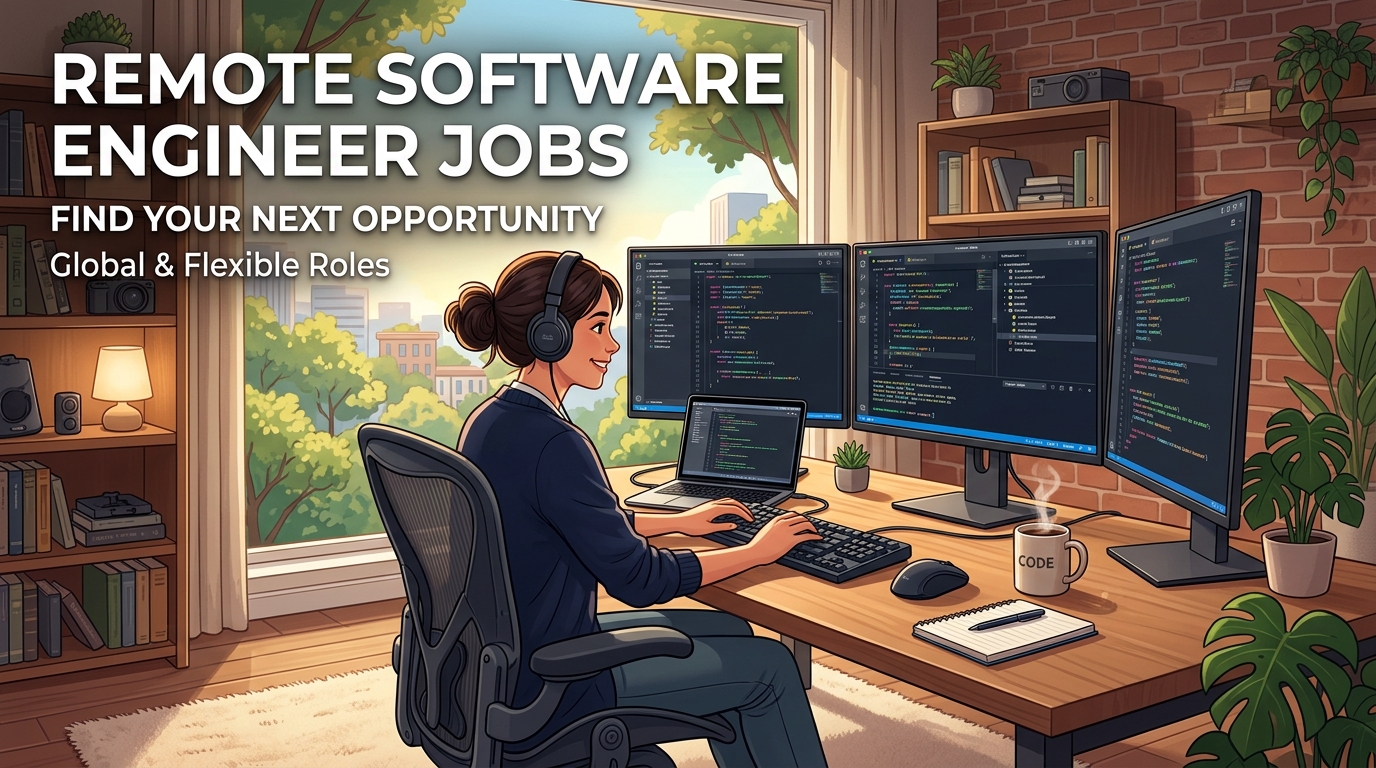
For tech professionals, the appeal is clear. A remote setup allows you to design your perfect home office, eliminate exhausting daily commutes, and maintain a healthier work-life balance. Whether you are a night owl who codes best at 2 AM or a digital nomad exploring new countries, remote engineering roles provide the flexibility you need to thrive.
According to data from the Bureau of Labor Statistics (BLS), employment of software developers is projected to grow much faster than the average for all occupations. The transition to remote work has only accelerated this growth, as companies are no longer constrained by geographical boundaries when sourcing top talent.
Essential Skills for Remote Developers
While the technical requirements for a remote software engineer are similar to those of an in-office developer, the environment demands a unique set of soft and hard skills to succeed.
1. Advanced Technical Proficiency
Remote teams rely heavily on cloud infrastructure, CI/CD pipelines, and modern frameworks. You need a strong grasp of version control (Git), cloud platforms like AWS or Google Cloud, and containerization tools such as Docker and Kubernetes. Furthermore, being well-versed in high-demand languages like Python, JavaScript (React, Node.js), or Go will make you a prime candidate.
2. Asynchronous Communication
When your team is spread across different time zones, real-time meetings aren't always possible. Excellent written communication is crucial. You must be able to write clear documentation, precise pull request descriptions, and descriptive issue tickets. Mastering asynchronous communication ensures that development continues smoothly even when your colleagues are offline.
3. Self-Motivation and Time Management
Without a manager looking over your shoulder, you are solely responsible for managing your time. Successful remote software engineers are highly disciplined. They know how to block out deep-work periods, minimize distractions at home, and consistently meet project deadlines.
How to Stand Out in a Remote Job Market
Because you are competing with developers globally, you need to elevate your profile. Here are some actionable strategies to help you secure that coveted remote position:
- Build a Strong Portfolio: Since employers can't meet you in person, your code must speak for you. Maintain an active GitHub profile with comprehensive READMEs. Contribute to open-source projects to show you can collaborate with distributed teams.
- Optimize Your Online Presence: Ensure your LinkedIn and personal website clearly state your preference and readiness for remote work. Highlight any past remote experience.
- Master the Remote Interview: Remote interviews are exclusively conducted via video calls. Ensure you have a reliable internet connection, a quiet environment, and good lighting. Practice coding on a digital whiteboard or via a shared screen environment.
If you're curious about how this compares to general on-site roles, check out our broader guide on Software Engineer Jobs. And if you're interested in pivoting towards product strategy, a role in Remote Product Management might be the perfect next step.
Average Salaries and Compensation
One of the most attractive aspects of remote software engineering is the compensation. Many top-tier tech companies now offer location-agnostic pay or adjust salaries based on national averages rather than local cost of living. A mid-level remote software engineer can expect to earn between $110,000 and $150,000 annually, with senior developers commanding well over $180,000. Additionally, remote roles often come with stipends for home office setups, internet bills, and co-working space memberships.
Frequently Asked Questions (FAQ)
Do I need previous remote experience to land a remote software engineer job?
While previous remote experience is a plus, it is not strictly required. Highlighting your ability to work independently, manage your time, and communicate effectively via text and video can prove you are ready for a remote role.
What equipment do companies provide for remote engineers?
Most reputable tech companies will provide a high-end laptop (often a MacBook Pro) and a budget for setting up your home office. This budget can usually be spent on an ergonomic chair, an external monitor, a desk, and other productivity accessories.
Can I travel while working as a remote software engineer?
This depends on the company's policy. Some companies are fully "work from anywhere" and support digital nomadism. Others require you to be based in a specific country or time zone for tax, legal, or collaborative reasons. Always clarify this during the interview process.
Is remote work isolating?
It can be if you don't proactively engage with your team. Good remote companies host virtual team-building events, pair programming sessions, and annual company retreats to foster connection. Working from a co-working space is also a great way to meet people.