
The Engine Room of the Internet
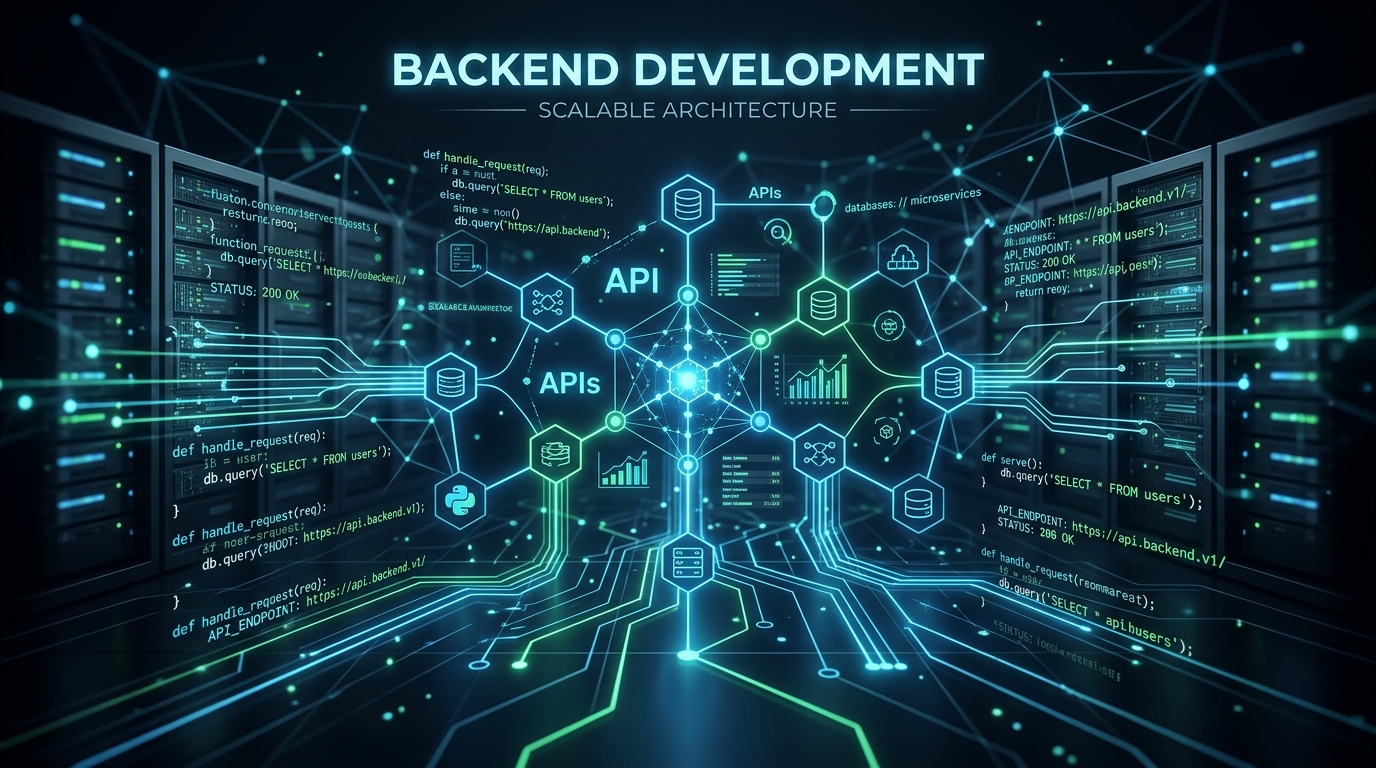
While users interact with the visual elements of a website or app, it’s the backend that brings everything to life. A backend developer works on server-side software, focusing on databases, backend logic, APIs, architecture, and servers. When you log into an application, search for a product, or stream a video, backend code is working tirelessly to fetch and process data to deliver a seamless experience.
In recent years, the push toward cloud computing and microservices has transformed backend development. Companies are constantly seeking skilled engineers to build robust architectures that can handle millions of concurrent users. According to the Bureau of Labor Statistics (BLS), employment for software developers, including backend specialists, is projected to grow by 25% from 2022 to 2032, much faster than the average for all occupations.
Core Skills for Backend Developers
Becoming a proficient backend developer requires a solid grasp of programming languages, databases, and server management. If you're transitioning from a frontend developer role or starting fresh, here are the critical skills you need:
- Programming Languages: Python, Java, Node.js, C#, Go, and Ruby are staples in the backend ecosystem. Python and Node.js have become especially popular for their extensive libraries and community support.
- Databases: Understanding both relational (SQL) databases like PostgreSQL and MySQL, and NoSQL databases like MongoDB and Redis is crucial for efficient data storage and retrieval.
- API Development: Designing and implementing RESTful APIs and GraphQL to allow the frontend to communicate with the backend smoothly.
- Cloud Platforms: Familiarity with AWS, Google Cloud, or Microsoft Azure for deploying, scaling, and managing cloud infrastructure.
- Security and Authentication: Ensuring data protection through protocols like OAuth, JWT, and implementing best security practices to thwart cyber threats.
A Day in the Life
Backend developers spend their time writing clean, scalable code, optimizing database queries, and debugging server-side issues. You might start your day collaborating with software engineers and product managers to define system requirements for a new feature. Later, you could be writing unit tests to ensure your code handles edge cases, or analyzing server logs to identify performance bottlenecks.
As the backbone of any tech team, backend developers often play a pivotal role in architectural decisions. Should the application use a monolithic architecture or microservices? Which database is best suited for the anticipated data load? These are the types of challenging questions backend developers answer regularly.
Future Trends in Backend Development
The tech landscape is evolving rapidly, and backend development is no exception. Serverless computing is gaining traction, allowing developers to build and run applications without managing servers. Additionally, the integration of Artificial Intelligence (AI) and Machine Learning (ML) models requires backend systems to process massive datasets faster than ever before. Staying updated with these trends will ensure long-term career growth and open doors to specialized roles like Data Engineering or Cloud Architecture.
Frequently Asked Questions
1. What is the difference between frontend and backend development?
Frontend development focuses on the visual aspects of a website or app—what users interact with. Backend development deals with the server, database, and application logic that powers the frontend.
2. Do backend developers need to know algorithms and data structures?
Yes, a strong understanding of algorithms and data structures is highly beneficial. It helps in writing efficient code, optimizing database queries, and is often a key component of technical interviews.
3. Can I get a backend developer job without a degree?
Absolutely. Many successful backend developers are self-taught or have completed coding bootcamps. A strong portfolio demonstrating your ability to build complex, scalable systems is often more valuable than a formal degree.